


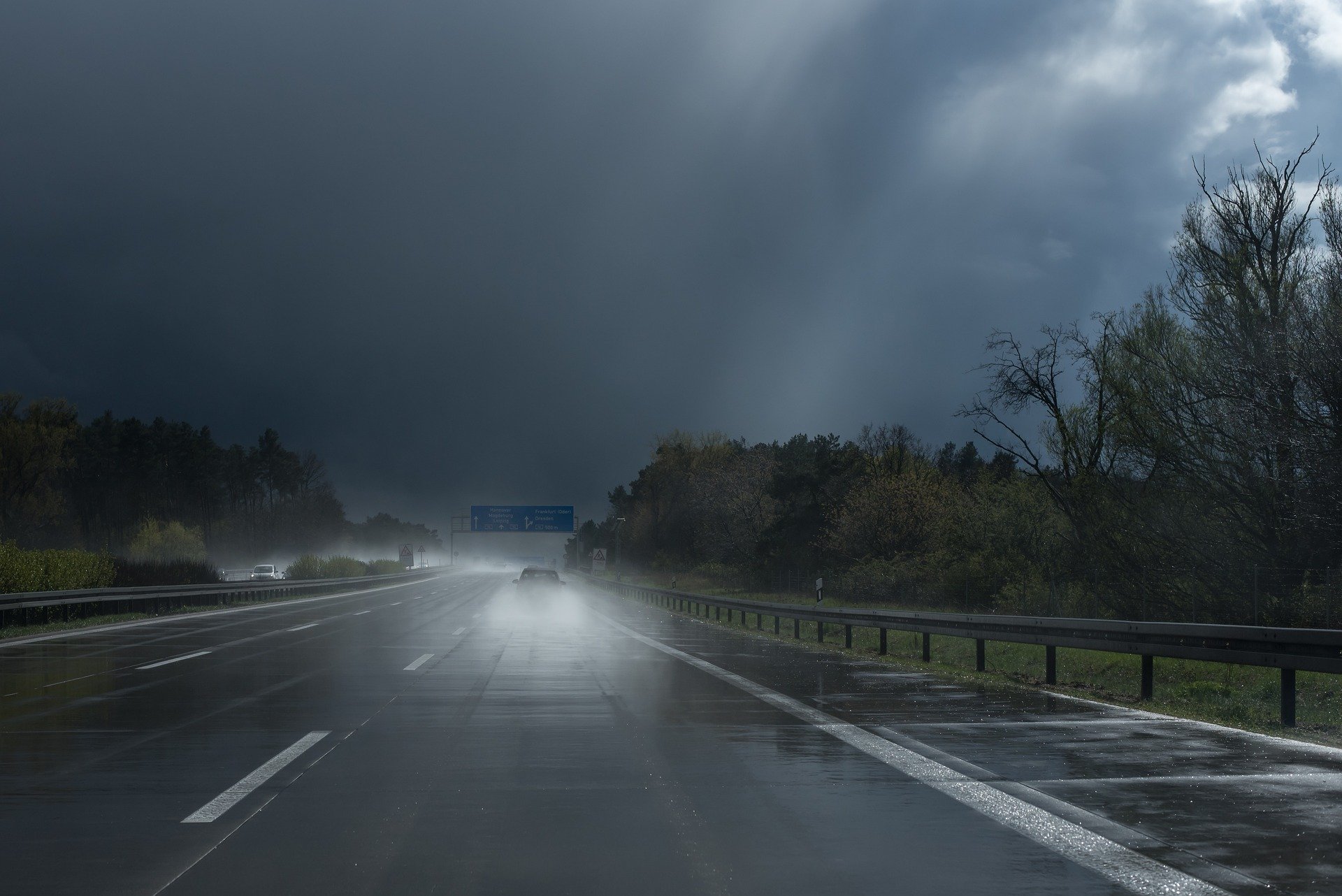
It's raining quite heavily and the road looks a bit slippery. Still, you don't want to drive too slowly, as you have an important appointment scheduled that you don't want to be late for. You were already running late, so you decide to speed up a bit. Suddenly, you feel that you've lost grip on the road. Oops! You're experiencing aquaplaning. What exactly is aquaplaning and what should you do if you aquaplane? And can you prevent aquaplaning in the future? Read on to find out.
Aquaplaning is a phenomenon where a layer of water builds up between a vehicle's tyres and the surface it's driving on, causing the tyres to lose traction. This can happen when driving at speed through standing water, such as during heavy rain or when driving over puddles. The water can't be displaced quickly enough by the tyre treads, creating a wedge of water that lifts the tyre off the road surface.
When it rains, a layer of water forms on the road. Normally, the tread on your tyres can channel or ‘displace’ this water, ensuring your tyres maintain contact with the road. However, if you drive too fast, or if your tyre tread is not deep enough, the water cannot escape and a layer of water will form under the tyres. This causes you to drive on the water, as it were, and the car becomes unmanageable. This condition is known as Aquaplaning.
Example of aquaplaning
When it's raining heavily and you're driving at around 100 km/h, each tyre has to displace 4 litres of water per second. And this is while each part of the tyre only has contact with the road for 0.02 seconds. In this very short time, all the water would have to be channelled away to maintain contact with the road. This is almost impossible, which leads to aquaplaning.
Bij aquaplaning moet je het volgende doen:* **Gas terugnemen:** Haal je voet rustig van het gaspedaal. **Niet** trappen op de rem of plotseling sturen. * **Stuur recht:** Houd het stuur recht en probeer de auto rustig rechtdoor te laten rijden. * **Geduld:** Wacht tot de banden weer grip hebben. De auto zal dan vanzelf weer bestuurbaar worden.Aquaplaning ontstaat wanneer een laag water tussen je banden en het wegdek komt, waardoor je de controle over de auto verliest. Door rustig te reageren en het stuur recht te houden, vergroot je de kans dat je de controle weer terugkrijgt zonder ongelukken.
Do you find yourself in a situation where you've lost control of your car and the road? Below, you can read what to do in case of aquaplaning:
- Stay calm
First, it's important that you don't panic. You will eventually regain control of the car when it reaches a spot where there is less water on the road. - Take it easy
When encountering aquaplaning, it is best to reduce your speed by gently easing off the accelerator. Do not attempt to reduce speed by braking sharply, as this will cause you to lose control of the steering. - Hands on the wheel
Do you feel like you're losing traction? Keep your hands firmly on the steering wheel, and try to steer gently and look in the direction you want to go. - Steer with the slip direction
If you find yourself really getting into a skid, steer in the direction of the skid until you feel you're regaining grip on the road, and then immediately steer in the opposite direction. This way, you can get straight again. - Use the link
One final tip on what to do during aquaplaning is to press the clutch in. This ensures that the wheels do not just start rolling or braking suddenly. Release the clutch again the moment you are no longer experiencing aquaplaning.
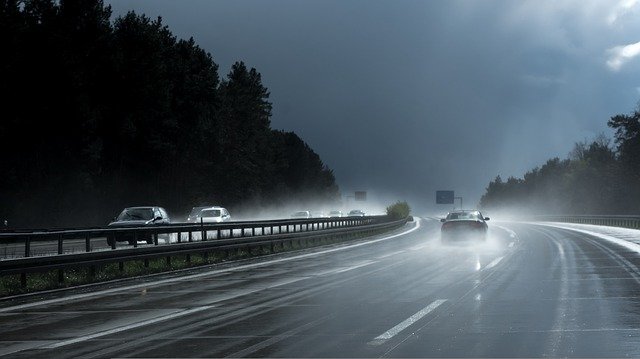
Kan aquaplaning voorkomen worde
Yes, aquaplaning can be prevented by taking a number of measures, namely:
Choose good, not thick tyres with the correct tread depth
You can drastically reduce the risk of aquaplaning by choosing good tyres. With the correct tyres You should be able to prevent aquaplaning up to a speed of 100 km/h. When choosing tyres, it is particularly important that the tyres are not too thick. With thinner tyres, the chance of aquaplaning is smaller, as they ‘cut’ through the water more.
Furthermore, it is very important that the tyres on your car have the correct tread depth. The deeper the tread, the more water the tyres can displace, and the lower the risk of aquaplaning. If you notice that your car's tyres have a tread depth of 3 mm or less, we recommend replacing them. For winter tyres, 4 mm depth is considered the wear limit.
Adapt your driving style to the weather conditions
You can also prevent aquaplaning by driving cautiously. It is especially important to safe driving in autumn and Winter, This is because there is more rainfall. So, what should you do in wet conditions to prevent aquaplaning? Reduce your speed and leave a little more distance between you and the vehicle in front. By driving slower, your tyres can displace more water, and the chance of aquaplaning is reduced. And if it does go wrong, the extra distance you've left will give you more space and time to regain control of your car.
Check the tyre pressure regularly
Finally, it's important to regularly check if your tyres are correctly inflated. With the correct tyre pressure, there is a smaller surface area of the tyre in contact with the road. The car's weight is also distributed over a smaller area. This reduces the chance of aquaplaning.
Have you ever experienced aquaplaning? I'd be interested to hear about your experiences!

2 responses
Good tips! Always scary when you get aquaplaning!
Useful article with good tips for if it should ever happen. Luckily, I've never experienced it myself!