


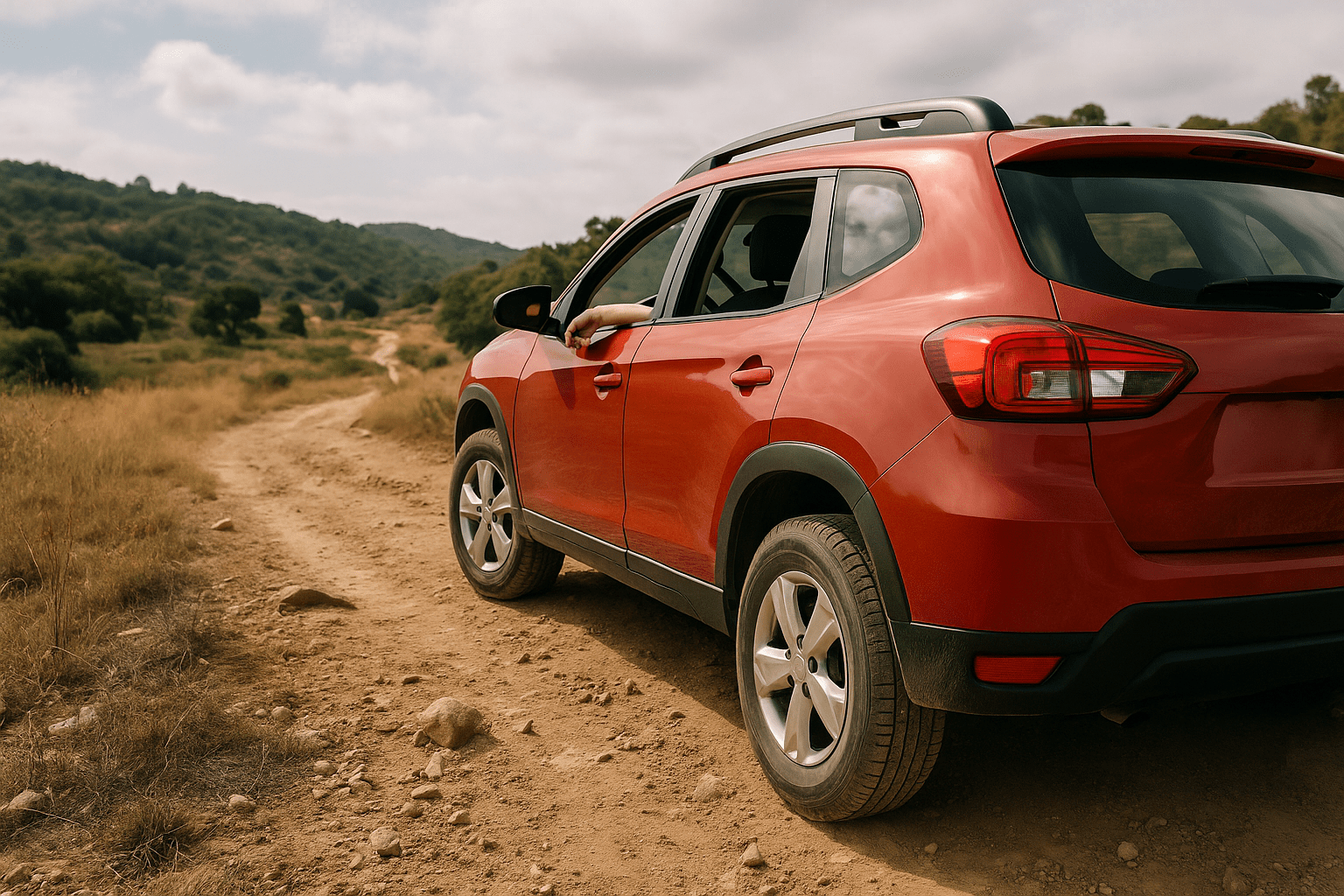
When you rent a car, you naturally want to be able to drive it as freely as possible. Especially if you're on vacation or visiting an adventurous destination, the question might arise: are you allowed to drive a rental car off-road? It might sound tempting to take that dirt road or mountain trail, but the rules are stricter than you think. This article explains what's allowed and what's not, and what you should keep in mind.
What do we mean by off-road driving?
Off-road driving means leaving the paved road and using the car on unpaved paths, dirt roads, forest trails, or rough terrain. Think of gravel paths in mountainous areas, beach roads, or even muddy forest trails.
While this may sound adventurous, most rental cars aren't designed for this. They're designed for normal use on paved roads.
Are you allowed to drive off-road with a rental car?
In almost all rental agreements the following applies: no, off-road driving is not allowedThis is often explicitly stated in the landlord's terms and conditions.
The main reasons:
Damage and wear – Off-road driving increases the risk of damage to tires, rims, underbody and engine.
Insurance – Damage that occurs outside public roads is usually not covered.
Safety – A standard rental car is not technically equipped for rough terrain.
If you do go off-road, this may mean that you will be responsible for all costs in the event of damage.
Are there any exceptions?
There are a few situations where off-road driving is possible:
4x4 or SUV rental Some rental companies offer off-road vehicles suitable for off-road use. However, restrictions often still apply, such as no driving through water, on beaches, or in protected areas.
Landlord's consent – Sometimes you can request permission in advance for use on a specific type of road (for example, an unpaved access road to your holiday home).
Always read the rental agreement carefully or ask the landlord directly.
What are the consequences of driving off-road without permission?
If you drive off-road without permission, you run risks:
- Damages will be fully recovered from you.
- Additional costs, such as towing and repair costs, are at your own expense.
- The landlord may decide to retain the deposit.
In other words, a short fling can cost a lot of money.
Tips if you want to drive off-road
Would you still like to take a route that is (partially) unpaved? Then it's best to:
Renting a suitable car – Ask for a 4×4 or SUV, especially designed for rougher terrain.
Check conditions – Always check the rental agreement and ask explicitly what is permitted.
Find alternatives – Sometimes there are organised excursions with all-terrain vehicles or quads that are safe and legal.
This way you can still enjoy adventure, without financial risks.
Ready to see how Snowflake works?
Driving off-road with a rental car is generally prohibited. If you do, the risks are high, and you'll likely be responsible for any damage yourself. Want to explore unpaved roads? Then rent a 4x4 and make sure it's clearly stated in the terms and conditions. This way, you can be sure you'll enjoy your trip worry-free.
Frequently Asked Questions (FAQ)
Can I drive onto a dirt road with a regular rental car?
No, standard rental cars are only intended for paved roads. Dirt roads are often considered off-road and are therefore not permitted.
Is damage caused by off-road driving covered by insurance?
No, damage outside public roads is almost always excluded from insurance.
Can I get a rental car that allows me to go off-road?
Yes, some rental companies offer 4x4 and SUV rentals, but always ask about the specific terms and conditions.
What happens if I drive off-road?
In the event of damage or breakdown, you will be responsible for the costs and the deposit may be retained.